
Festive Flavours: How Panjeeri Became a Symbol of Celebration
- Desi Panjeeri Team

- Nov 4, 2025
- 5 min read
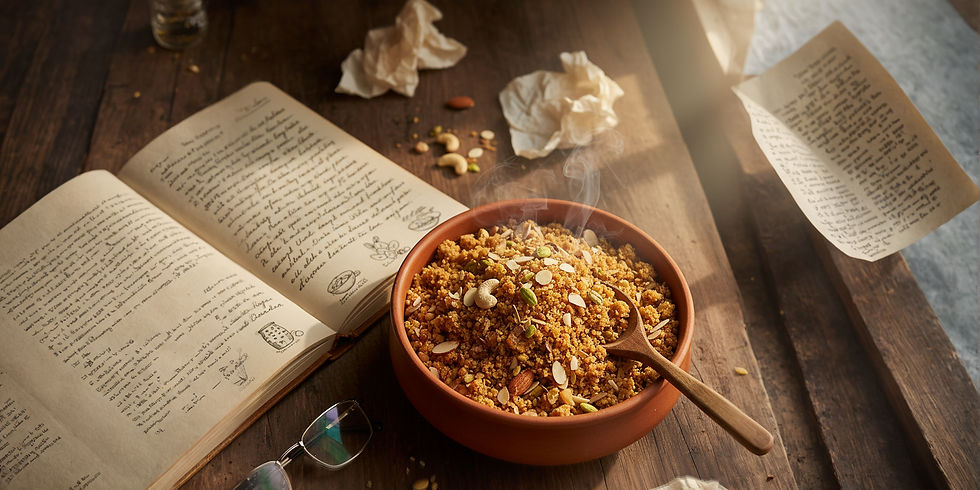
There are some dishes that never leave the heart of a celebration — Panjeeri is one of them. In South Asian households, no festival or milestone feels complete without it. It’s sweet, warm, and deeply nostalgic. But more than its ingredients, Panjeeri represents something far greater — joy shared through tradition.
Whether it’s offered during weddings, religious festivals, or as a token of love after a family milestone, this humble mixture of roasted wheat, ghee, and nuts has carried centuries of meaning and connection.
The Sweet Beginning of Tradition
The story of Panjeeri as a festive food begins with simplicity. Originally created as a nutritional mix to restore strength, it was never meant to be luxurious. But like many traditional dishes, its meaning evolved as families found comfort in its warmth and taste.
Soon, it wasn’t just food — it became a symbol. A spoonful of Panjeeri meant care, prosperity, and togetherness. As families celebrated births, marriages, or religious milestones, the dish naturally found its place on the festive table.
In many Punjabi and Sindhi households, for instance, no joyous event is complete without a bowl of freshly made Panjeeri — whether it’s a wedding morning, a baby’s naming ceremony, or the celebration after fasting. Over time, the simple blend of wheat flour, ghee, sugar, and dry fruits became a ritual of joy, unity, and gratitude.
Panjeeri and Weddings: The Taste of New Beginnings
In traditional weddings, Panjeeri has long been associated with blessings and abundance. It’s often included in shagun(the symbolic gifts exchanged during ceremonies) or served as a part of the sweet offerings for guests.
In some cultures, the bride’s mother or grandmother prepares a special batch of Panjeeri before the wedding — a gesture of love and farewell. It’s said to symbolise strength and sweetness for the bride as she enters a new phase of life. The act of making it itself becomes emotional — a recipe prepared with both joy and nostalgia, passed from one home to another.
Many brides today still request a jar of homemade Panjeeri to take with them after the wedding — not just for nourishment, but as a taste of home they can carry wherever they go.

Religious Festivals: Nourishment Meets Spirituality
During religious occasions, Panjeeri holds sacred value. It’s a common offering (prasad) in temples and homes alike, particularly during Hindu festivals such as Janmashtami, Navratri, and Diwali. Its ingredients — wheat, ghee, sugar, and nuts — are symbolic of purity, energy, and devotion.
Unlike rich, modern sweets, Panjeeri’s charm lies in its modesty. It’s made with simple ingredients that reflect humility and gratitude — the essence of spirituality. In Sikh households, it’s often distributed after Paath (scripture readings) or community gatherings as a mark of sharing blessings.
Even in Islamic traditions, variations of Panjeeri are made during Eid or after fasting periods. Its nourishing qualities make it the perfect food to celebrate strength, perseverance, and faith.
Across borders and beliefs, the recipe changes slightly — some add coconut, some add semolina, others prefer cardamom — but the heart of it remains the same: celebration rooted in simplicity.
A Sweet Gift for Every Milestone
Birthdays, baby showers, anniversaries — every life milestone becomes sweeter with a touch of Panjeeri. It’s often prepared in large batches and distributed in jars, pouches, or small decorative boxes during happy occasions.
The beauty of gifting Panjeeri lies in its intention. It’s not about extravagance, but about emotion — “Here’s something made by hand, from the heart.”
In modern times, Panjeeri has also found a place in personalised gifting. Handmade jars tied with ribbons, labelled “Made with Love” or “Grandma’s Recipe”, are now a trendy yet sentimental way of celebrating togetherness. Even in a world filled with fancy desserts, the charm of a traditional sweet made at home remains unmatched.
From Generations to Gatherings
What makes Panjeeri so timeless is its ability to bridge generations. Every family seems to have their own version — with almonds or without, sweetened with sugar or jaggery, roasted dark or kept light. And when families come together during festivals, everyone has a story to tell about how their mother or grandmother made it “just right.”
In a festive gathering, one bowl of Panjeeri can spark hours of conversation — about childhoods, memories, and lost traditions. It reminds people that no matter how much life changes, some flavours will always bring them back home.
For younger generations living abroad, making Panjeeri during festivals becomes a way to reconnect with their roots. The sound of roasted flour and the golden glow of ghee bring an immediate sense of belonging — like carrying a piece of the family celebration across borders.

The Evolving Modern Touch
Today, Panjeeri isn’t limited to traditional kitchens. Creative cooks are reinventing it into energy bites, granola bars, and festive hampers. It’s a blend of old and new — modern presentation with traditional taste.
During festivals, cafés and small businesses now feature “Desi Panjeeri jars” as part of gift hampers, pairing them with tea, candles, or dried fruits. This revival isn’t just about food — it’s about rediscovering heritage in a modern world.
Whether it’s served in a gold-rimmed bowl or a mason jar, Panjeeri continues to symbolise celebration that’s rooted in culture and emotion.
Why Panjeeri Matters More Than Ever
In an age of instant desserts and online deliveries, Panjeeri’s slow preparation reminds us of patience, intention, and family togetherness. Making it for someone is an act of love — it requires time, care, and warmth.
That’s why, even today, you’ll find it on festive tables — a humble dish that quietly connects hearts. It doesn’t sparkle like fancy sweets, but it carries generations of stories in every bite.
From temples to homes, from weddings to Eid feasts, Panjeeri continues to stand for what every celebration is truly about — love, sharing, and gratitude.
So the next time you celebrate, make a small batch. Share it with family and friends. Because every spoonful of Panjeeri is more than a sweet — it’s a reminder that joy tastes best when it’s shared.
Disclaimer:
Panjeeri is a traditional South Asian food prepared for both festive and everyday occasions. Its cultural value is rooted in heritage, not scientific evidence of health benefits.

Comments