
The Art of Slow Cooking: What Making Panjeeri Teaches Us About Patience
- Desi Panjeeri Team

- Nov 1, 2025
- 5 min read
Introduction: A Lesson Simmering in Tradition
In today’s fast-paced world, where meals can be delivered at the click of a button and cooking is often reduced to a convenience, slow cooking feels almost like a forgotten art. Yet, within many South Asian households, there exists a dish that quietly resists this rush — Panjeeri.This traditional sweet, made from whole wheat flour, ghee, and an assortment of nuts and spices, carries with it not only the scent of nostalgia but also a timeless lesson in patience, presence, and care.
Making Panjeeri isn’t just about the recipe. It’s a ritual — one that reminds us that good things take time, and that nourishment is as much emotional as it is physical. Each slow stir of the pan becomes an act of mindfulness, connecting us with generations before us who practised the same quiet rhythm of care.
A Cultural Symbol of Care and Mindfulness
In South Asian culture, food is rarely just food. It’s medicine, love, and storytelling woven together. Panjeeri, in particular, has long been associated with care and recovery — especially for new mothers. Grandmothers and mothers often prepare it postpartum, believing that its warmth and richness strengthen the body.
But beyond its nutritional value, Panjeeri represents devotion in motion. The process itself demands time — roasting flour until golden, stirring steadily so it doesn’t burn, and adding each ingredient at just the right moment.In an era where instant gratification is the norm, Panjeeri stands as a quiet protest. It insists that you stay, stir, and savour the process — much like life itself.
The Rhythm of Slow Cooking
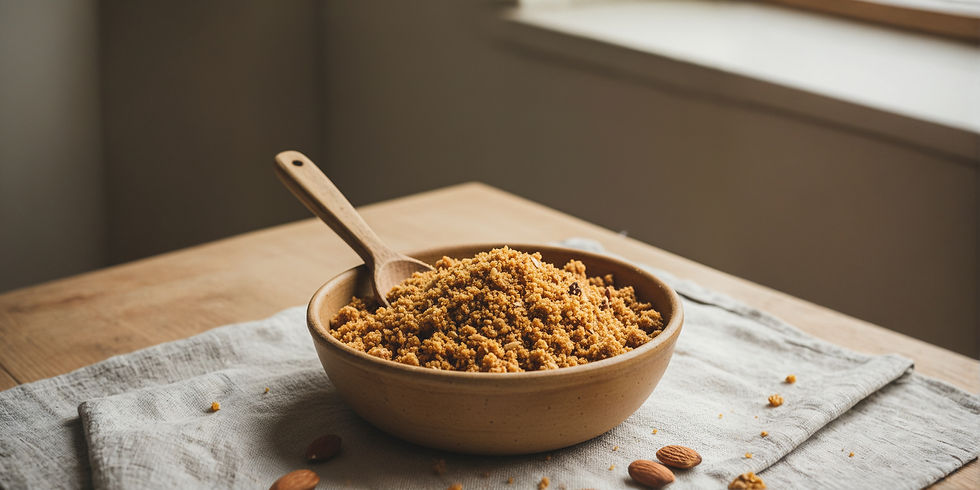
If you’ve ever made Panjeeri from scratch, you know it’s not something to be rushed. The flour must be roasted patiently over low heat until its aroma deepens and its colour shifts ever so slightly. The ghee must be warmed, not scalded, and the nuts must be toasted to perfection — fragrant but never burnt.
It’s in these subtle details that Panjeeri teaches mindful attention. You can’t multitask your way through it. The moment you rush, it shows — the taste, texture, and aroma lose their balance.
This patience is transformative. Slow cooking teaches us to embrace stillness, to focus on the small, deliberate motions that create harmony. Each stir becomes meditative. Each ingredient becomes symbolic of time, care, and memory passed down through generations.
What Patience Really Means in the Kitchen
In many ways, cooking Panjeeri is a metaphor for life. The process mirrors the patience we need when nurturing anything — relationships, goals, or self-growth.You can’t hurry emotional healing, and you can’t rush a dish that depends on gentle roasting. The beauty of both lies in gradual transformation.
As the flour darkens slowly, it reflects the unseen effort — the quiet persistence that yields reward. And when the scent fills your kitchen, you realise patience isn’t passive; it’s deeply active. It’s the ability to stay present without seeking shortcuts.
Cooking becomes a grounding experience, an opportunity to slow down and simply be — listening to the crackle of ghee, feeling the heat, and breathing in the comforting aroma that speaks of home.
The Mindful Cook: A Bridge Between Generations
For many of us, learning to make Panjeeri is a rite of passage. It’s how our mothers and grandmothers silently taught us the art of patience, discipline, and intuition. There’s no strict measurement when they cook — a handful here, a spoonful there — but every motion is deliberate, born from years of practice.
When we recreate those recipes today, we’re not just cooking food; we’re preserving wisdom. The act itself becomes intergenerational mindfulness — a bridge connecting us to the past while grounding us in the present.
It’s in this slow, intentional process that we learn something deeper: mindfulness isn’t always about meditation or silence. Sometimes, it’s found in the rhythm of stirring a pot and knowing that your patience is creating something beautiful.
A Taste That Can’t Be Rushed
Ask anyone who has tasted freshly made Panjeeri, and they’ll tell you — you can taste the patience. The roasted flour’s nutty warmth, the sweetness balanced just right, and the subtle spices like cardamom or fennel that round off the flavour — they all carry a depth that only time can create.
There’s a distinct difference between something cooked quickly and something nurtured slowly. It’s like comparing fast food to comfort food made by someone who loves you. One fills your stomach; the other fills your soul.
Panjeeri reminds us that slowness doesn’t mean inefficiency. It means intentionality — doing one thing with your full presence. And that’s a lesson we could all use in a world that measures success by speed.

Applying the Lesson Beyond the Kitchen
The patience we learn through slow cooking can extend far beyond food. It teaches us to take a gentler approach to ourselves and others — to trust the process, even when progress seems slow.
Whether it’s waiting for a career breakthrough, healing from something emotional, or learning a new skill, the message remains the same: slow growth is still growth. Just as the flavours in Panjeeri deepen over time, so do we.
In this way, every spoonful becomes symbolic — a reminder that good things, whether meals or moments, are worth waiting for.
Conclusion: The Modern Need for Slowness
In a world that celebrates speed, Panjeeri quietly teaches the opposite: that true nourishment — of body, mind, and soul — requires slowness. The art of slow cooking isn’t just about food; it’s about reclaiming a rhythm of life where time and care are ingredients in everything we do.
So the next time you prepare Panjeeri, don’t rush. Let the flour roast until golden. Let the aroma rise slowly and fill your home. In that moment, you’ll realise you’re not just making a sweet you’re practising patience, mindfulness, and love, one slow stir at a time.
Disclaimer
While Panjeeri is traditionally believed to offer health benefits, especially postpartum, its effects are based on cultural practice rather than scientific evidence. Always consult a healthcare provider for personalised health advice.


Comments