
Regional Panjeeri Recipes Across South Asia Variations from Punjab, Sindh, Bengal, and Beyond
- Desi Panjeeri Team

- Oct 30, 2025
- 5 min read
Across South Asia, Panjeeri has long been a symbol of nourishment and affection — a food that carries both cultural pride and generational wisdom. Though its roots lie in the Indian subcontinent, this humble, hearty mixture takes on different forms in every region — from the earthy kitchens of Punjab to the coastal homes of Bengal.
Each community has infused Panjeeri with its own ingredients, flavours, and customs, making it more than just a snack. It’s a culinary mosaic of history, geography, and emotion — where one dish becomes many stories.
Punjab: The Heart of Traditional Panjeeri
In Punjab, both Indian and Pakistani, Panjeeri is considered a winter essential — an energy-packed, immunity-boosting food prepared in almost every home. The Punjabi version is dense, nutty, and aromatic, made with roasted wheat flour, pure desi ghee, crushed almonds, pistachios, and edible gum (gond).
Many households add makhana (lotus seeds), desiccated coconut, and ajwain seeds for warmth and digestion. The fragrance of slowly roasted flour mixed with ghee fills the home, especially during January’s cold spells.
Punjabi mothers also make special versions for new mothers, adding healing herbs like suhaaga or sonth (dry ginger powder). It’s said to “warm the bones” and help the body recover from childbirth — a practice steeped in generations of trust and care.
Signature flavour: Deeply roasted, rich, and buttery with a hint of cardamom.Best enjoyed: With chai in winter mornings or as a post-meal dessert.
Sindh: A Simpler, Earthier Take
Travel a little south to Sindh, and Panjeeri takes a lighter, more rustic form. The Sindhi version often uses coarse semolina (sooji) instead of whole wheat flour, giving it a granular texture.
Instead of heavy ghee, some families use clarified oil or a smaller quantity of ghee to suit the warm climate. The sweetness is moderate, relying on jaggery (gur) for its rich, caramel-like taste rather than refined sugar.
Sindhi Panjeeri also features poppy seeds, fennel, and dates — ingredients that reflect both the desert climate and trade influences of the region. It’s often served during festivals or as a travel snack, as it can be stored easily and lasts long without refrigeration.
Signature flavour: Sweet, earthy, slightly grainy with the depth of jaggery.Best enjoyed: During fasting months or as a nourishing evening snack.
Bengal: The Fragrant, Festive Variation
In Bengal, the idea of Panjeeri takes on a completely different personality — lighter, aromatic, and more festive. Here, the focus shifts from heavy nourishment to flavour and texture.
Known locally in variations like atta laddu mix or mohan bhog style Panjeeri, Bengali households often prepare it using coarse wheat flour roasted with ghee, coconut flakes, and a generous pinch of nutmeg and saffron. Cashews, raisins, and cardamom add a festive touch, while some versions swap wheat entirely for flattened rice (poha) or chana flour (besan).
Unlike the dense Punjabi mix, Bengal’s Panjeeri is lighter and more aromatic — often prepared during religious offerings or as part of festive sweets for Durga Puja and Saraswati Puja.
Signature flavour: Fragrant, coconutty, and spiced with nutmeg and saffron.Best enjoyed: As prasad (offering) during festivals or as a delicate tea-time treat.
Kashmir: The Warming Winter Blend
In the colder valleys of Kashmir, winters are harsh, and food must offer warmth and strength. Kashmiri Panjeeri mirrors this need — thick, spiced, and full of dried fruits.
It often includes walnuts, dried apricots, figs, and almonds, roasted in ghee with wheat flour and lightly sweetened with shakkar (brown sugar) or honey. Spices like clove, cinnamon, and dry ginger lend a distinct aroma and a soothing heat that’s perfect for snowy evenings.
This regional twist gives Panjeeri a more Middle Eastern influence, reflecting the region’s cultural exchange over centuries. It’s not only eaten as food but often gifted during winter months as a sign of care and abundance.
Signature flavour: Deep, spiced, and fruity.Best enjoyed: On cold nights with kahwa (Kashmiri spiced tea).
Rajasthan: The Desert’s Nourishing Sweet
In Rajasthan, where desert winds bring extremes of heat and cold, Panjeeri is an ingenious way to preserve nutrition. The Rajasthani version often includes bajra (pearl millet) or besan (gram flour) instead of wheat, making it suitable for arid climates.
It’s roasted slowly with desi ghee and combined with dry fruits, jaggery, and edible gum. The texture is crumbly and rich, often shaped into small laddus for easy storage.
The locals call it Sonth Panjeeri, known for its use of ginger powder and ajwain, both valued for aiding digestion. It’s a traditional postpartum and winter recipe that provides energy in extreme weather.
Signature flavour: Earthy, gingery, and mildly sweet.Best enjoyed: During desert winters or as a morning energy booster.

Gujarat: The Balanced, Everyday Version
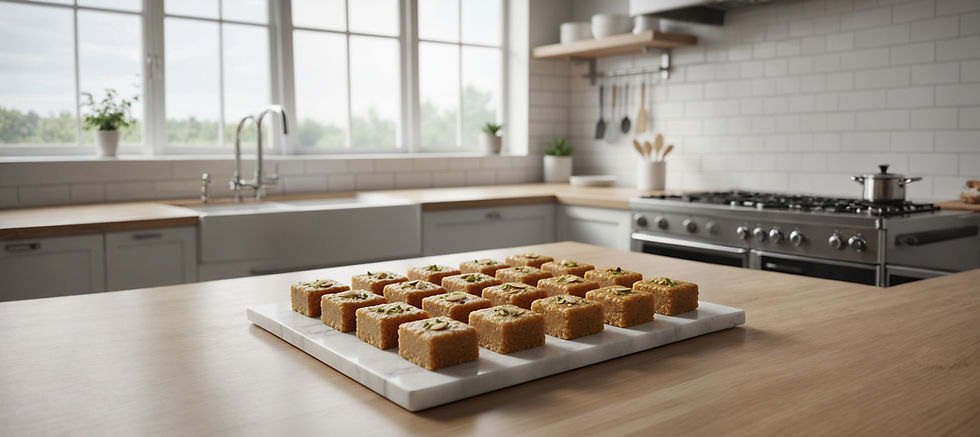
Gujarat’s Panjeeri, often called sukhdi or gol papdi, is simpler yet deeply satisfying. Made with wheat flour, jaggery, and ghee, it’s cut into squares and served like fudge.
Unlike other regional versions, this one doesn’t always include nuts or seeds — making it an everyday snack rather than a special occasion dish. However, during festivals or postpartum care, women enrich it with dry fruits, poppy seeds, and ajwain.
It’s also common to see Gujarati families prepare dry Panjeeri powder mixes that can be stored for months and eaten daily with warm milk.
Signature flavour: Sweet, nutty, and soft with jaggery undertones.Best enjoyed: As a morning snack or after meals.
Beyond Borders: Panjeeri Across the Diaspora
As South Asians migrated across continents, Panjeeri travelled with them — crossing oceans, adapting to new ingredients, and yet holding on to its heart.
Today, you’ll find versions made with oats, quinoa, flaxseed, and almond flour in homes across the UK, Canada, and the Middle East. While the base may evolve, the emotion behind it remains unchanged — a spoonful of warmth, memory, and belonging.
Disclaimer:
The traditional health benefits described are based on cultural practices and generational beliefs, not medical evidence. While Panjeeri’s ingredients are nutritious, it should not replace professional health or dietary advice.
Conclusion: One Dish, Many Stories
From the snowy peaks of Kashmir to the humid coasts of Bengal, every bowl of Panjeeri tells a story of its people — their land, their weather, and their way of care. It’s a dish that has travelled through time, shaped by the hands of mothers, grandmothers, and communities.
Though recipes vary, one truth remains: Panjeeri is love, preserved in flavour.A reminder that in every region, care is cooked, shared, and remembered — one spoonful at a time.


Comments