
The Future of Desi Superfoods: Why Panjeeri Belongs on the Global Shelf
- Desi Panjeeri Team

- Nov 23, 2025
- 5 min read
“Superfood” used to mean imported chia seeds, quinoa bowls, and expensive açai smoothies. But around the world, people are slowly turning back to what their grandmothers already knew: traditional foods, made with simple ingredients, can be some of the most powerful “superfoods” of all.
For South Asia, one of those quiet powerhouses is panjeeri.
Made with roasted whole wheat flour (or semolina), desi ghee, nuts, seeds, and warming spices, panjeeri has been a go-to for new mothers, growing children, and anyone recovering from illness or weakness. What used to be a “dadi ka nuskha” (grandma’s remedy) now has the potential to become a global wellness product—if it’s positioned the right way.
Let’s explore why panjeeri deserves its place on international shelves and how it fits into the future of desi superfoods.
1. From Home Remedy to Global Wellness Trend
Global food trends are shifting in favour of exactly what panjeeri offers:
Whole, recognisable ingredients rather than ultra-processed snacks
Functional foods that offer energy, immunity, and hormone support
Cultural authenticity, where people want to know the story behind what they eat
Panjeeri naturally ticks all three boxes. It is:
Built on whole grains (typically whole wheat flour or sooji)
Packed with good fats from ghee and nuts
Enriched with micronutrients from dry fruits, seeds, and herbs
For years, these benefits were known in desi households, especially for postpartum recovery, joint strength, and winter immunity. Now, as the global wellness market looks for the “next big superfood,” panjeeri stands out as something real, rooted, and time-tested.
2. Nutrient-Dense, Convenience-Friendly
One of the biggest advantages of panjeeri is its nutrient density per spoon.
A small serving can include:
Complex carbohydrates for steady energy
Healthy fats for hormone balance and satiety
Protein from nuts, seeds, and sometimes lentil flours
Iron, calcium, magnesium, and B vitamins from its mix of ingredients
In a world where people want quick but meaningful nutrition, panjeeri is almost made for:
Busy professionals who skip breakfast
Students who snack on sugary bars
New mothers with no time to cook full meals
Fitness enthusiasts looking for traditional, slow-burn energy
Formatted well—into bite-sized ladoos, granola-style clusters, bars, or ready-to-eat jars—panjeeri can easily sit next to protein bars, granolas, and muesli in supermarkets.
3. Storytelling: Culture Is the New Ingredient
Modern consumers aren’t just buying nutrients; they’re buying stories.
Panjeeri’s story is rich and emotional:
It’s the food that grandmothers lovingly prepare for new mums.
It’s the winter comfort snack that smells of cardamom and ghee.
It’s associated with care, recovery, and protection.
On a global shelf, this story can be a powerful differentiator. While many products claim “high protein” or “high fibre,” not many can say:
“This recipe has been passed down through generations of women who used it to heal, nourish, and restore.”
Desi superfoods like panjeeri bring heritage, tradition, and emotional value into the wellness conversation. That is exactly what modern, mindful consumers—from London to Toronto—are searching for.

4. Customisation: Modern Diets, Traditional Roots
Another reason panjeeri is ready for the global stage is its flexibility.
Brands can easily adapt it to suit different lifestyles:
Vegan versions with plant-based oils instead of ghee
Gluten-free versions using millet, oats, or other alternative flours
High-protein blends by adding seeds, lentil flours, or plant protein powders
Low-sugar options using dates, figs, or minimal unrefined sweeteners
This means panjeeri can exist as:
A post-workout snack
A hormone-friendly breakfast
A warm bedtime snack for better sleep
A postpartum care product with special herbs and spices
By innovating on form, flavour, and nutrition while respecting its roots, panjeeri can bridge the gap between ancient wisdom and modern needs.
5. Clean Labels and Conscious Consumers
People are reading the back of the packet more than ever before. They want:
Short ingredient lists
No strange chemicals
No artificial flavours or colours
A well-made panjeeri product naturally fits a clean-label promise:
Wheat or millet flour
Ghee or oil
Nuts and seeds
Spices like cardamom, fennel, ajwain
Natural sweetener
That’s it.
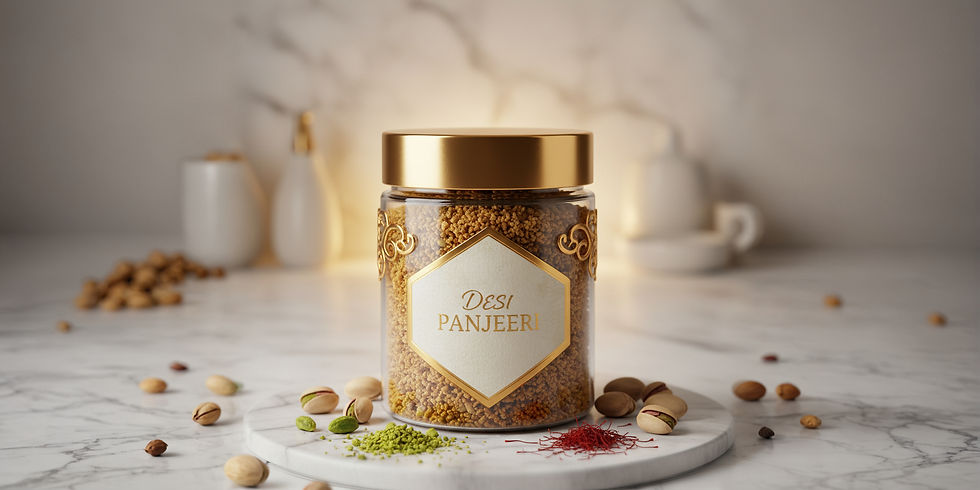
For health-conscious shoppers scrolling through hundreds of options, a jar labelled something like “Traditional Panjeeri – Roasted Whole Grains, Nuts, Seeds & Spices” feels trustworthy, simple, and real.
6. Desi Superfoods as a Category – Not Just a Trend
There is also a bigger movement happening: desi superfoods as a category.
Alongside panjeeri, the world is slowly discovering:
Makhana (fox nuts) as a low-calorie, crunchy snack
Gond (edible gum) for joint and postpartum support
Amla for Vitamin C and immunity
Haldi (turmeric) for anti-inflammatory properties
Chia-like local seeds such as basil seeds (tukmaria)
Panjeeri acts like a bundle of desi superfoods in one: it can contain makhana, gond, seeds, nuts, and more. That makes it a powerful “gateway product” to introduce global consumers to South Asian ingredients in a familiar, snackable form.
Instead of selling every ingredient separately, panjeeri offers a harmonised blend that’s already been tested and trusted in our culture.
7. What It Needs to Go Global
For panjeeri to truly belong on the global shelf, a few things are essential:
7.1 Standardisation and Quality Control
Traditional panjeeri recipes vary from home to home. For global markets, brands need:
Clear nutrition labelling
Consistent recipes
Allergen warnings (e.g., nuts, gluten, dairy)
Certifications (e.g., HACCP, organic, halal where relevant)
7.2 Modern Branding
The packaging and design must speak both heritage and modern wellness:
Simple, premium-looking jars or pouches
Earthy tones, cultural motifs, but clean and minimal
Clear messaging like “for energy,” “for postpartum recovery,” or “for winter immunity”
7.3 Education
Most people outside South Asia don’t know what panjeeri is. So brands must:
Explain how to eat it (with warm milk, as a snack, in yoghurt, sprinkled on porridge)
Highlight when to eat it (breakfast, pre-workout, postpartum, winter mornings)
Educate about ingredients like gond, ajwain, or char magaz in simple language
The more you guide the consumer, the more likely they are to make panjeeri a part of their daily routine.

8. The Future: From “Desi Secret” to Daily Staple
Panjeeri doesn’t need to be a niche, exotic product that people try once and forget. It has all the qualities of a daily staple:
It is comforting and familiar to South Asians living abroad.
It is exciting and new for non-desi consumers exploring global wellness.
It stands for care, strength, and nourishment, values everyone can connect with.
As the world grows tired of ultra-processed “healthy” snacks and begins to trust time-tested traditions, panjeeri has a real chance to move from tiffin boxes and steel dabbas into health stores, supermarkets, and online wellness platforms worldwide.
The future of desi superfoods is not about copying Western trends—it’s about confidently putting our own foods on the table.
And panjeeri, with its warmth, strength, and story, absolutely belongs on that global shelf.
Disclaimer: This blog is for general informational purposes only and does not replace professional medical or nutritional advice. Always consult a qualified health professional before making significant changes to your diet, especially during pregnancy, postpartum, or if you have existing health conditions.


Comments