
The Essential Role of Panjeeri in Traditional Desi Households.
- Desi Panjeeri Team

- Aug 23, 2025
- 4 min read
Updated: Oct 23, 2025
Panjeeri: A Nutrient-Rich Delight for Every Home
Panjeeri, a beloved Indian sweet, holds a cherished spot in the kitchens and hearts of many Desi families. More than just a treat, this nutrient-rich delicacy symbolizes love, care, and cultural heritage. Typically prepared during festivals, celebrations, or for nurturing new mothers, Panjeeri is a versatile food offering numerous health benefits. In this post, we will explore why Panjeeri is essential in every Desi household.
What is Panjeeri?
Panjeeri is a wholesome blend made from whole wheat flour, ghee (clarified butter), and a variety of nuts and seeds. It is usually sweetened with jaggery or sugar and flavoured with cardamom. While variations exist, the core is consistent: a rich, nutritious, and delicious treat enjoyed by people of all ages.
In North India, Panjeeri is closely associated with postpartum care for new mothers. This nutritious blend is believed to aid recovery and provide energy during the demanding early days of motherhood, making it an integral part of family traditions.
Nutritional Benefits of Panjeeri
Panjeeri is a staple in Desi households for many reasons, primarily its impressive nutritional profile.
Energy Booster: The combination of ghee and whole wheat flour delivers a notable boost in energy. For instance, just one serving of Panjeeri provides around 200-250 calories, making it an ideal snack for anyone needing quick replenishment.
Rich in Nutrients: Thanks to the various nuts and seeds included, Panjeeri is packed with essential vitamins and minerals. Almonds contribute vitamin E and magnesium, while walnuts are rich in omega-3 fatty acids, playing a critical role in heart health.
Digestive Health: With its fibre-rich ingredients, Panjeeri supports digestive health. Whole wheat flour and nuts can help maintain healthy gut flora, contributing to better overall digestive function.
Hormonal Balance: Ingredients like fennel and sesame seeds assist in balancing hormones, which can be particularly beneficial for women, especially during menstrual cycles or postpartum recovery.
Panjeeri in Postpartum Care
In many Desi cultures, Panjeeri is traditionally a key part of new mothers' diets.
Lactation Support: The healthy fats and nutrients in Panjeeri are thought to promote lactation. Studies suggest that certain fats can increase milk production, making Panjeeri a favoured food among nursing mothers.
Healing Properties: The warmth of ghee combined with the nourishing qualities of nuts promotes healing. After childbirth, women often feel fatigued, and Panjeeri serves as a comfort food that aids in recovery during this crucial period.
A Versatile Treat for All Occasions
Though often linked to postpartum care, Panjeeri's versatility makes it suitable for various celebrations.
Festivals and Celebrations: Panjeeri is a favourite during festivals like Diwali and Lohri. During these occasions, families prepare large batches to share, nurturing bonds with loved ones. For instance, an estimated 70% of families in North India include Panjeeri as part of their festive sweets.
Everyday Snack: Beyond special events, Panjeeri is a great healthy snack. It’s easy to store and perfect for on-the-go consumption. A small handful can satiate hunger and provide lasting energy throughout busy days.
Gift of Health: Gifting Panjeeri to friends and family, especially during times of celebration or recovery, demonstrates care. It is a thoughtful gesture that includes well wishes and health benefits.

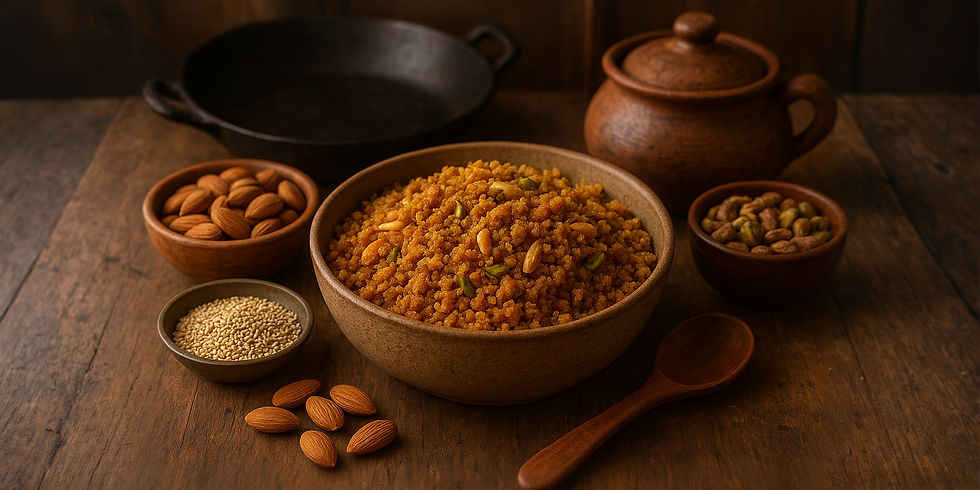
Rich texture and colour of desi panjeeri.
How to Make Panjeeri at Home
Preparing Panjeeri at home is simple and allows you to customise based on your preferences. Here's a basic recipe to get you started:
Ingredients
2 cups whole wheat flour
1 cup ghee
1 cup jaggery (grated)
1 cup mixed nuts (almonds, walnuts, cashews)
2 tablespoons fennel seeds
1 teaspoon cardamom powder
Instructions
Roast the Flour: In a heavy-bottomed pan, heat the ghee and add the whole wheat flour. Roast on low heat until it turns golden brown and aromatic, which usually takes about 10 minutes.
Add Nuts and Seeds: Introduce the mixed nuts and fennel seeds to the roasted flour. Continue to roast for a few more minutes to enhance the flavours.
Mix in Jaggery: Remove the pan from heat and let it cool slightly. Stir in the grated jaggery and cardamom powder, mixing thoroughly until well combined.
Shape and Store: Once cooled, shape the mixture into small balls or press it into a flat container. Store it in an airtight container to keep it fresh.
The Cultural Significance of Panjeeri
Panjeeri is not just a food item; it carries deep cultural significance. It is often associated with love and care, especially when prepared for new mothers. The act of making Panjeeri is a way to express affection and support during a transformative time in a woman's life.
This sweet treat is also a symbol of celebration. During festivals, families come together to prepare and share Panjeeri, reinforcing bonds and creating cherished memories. The aroma of roasting flour and ghee fills the home, evoking feelings of nostalgia and warmth.
Panjeeri: A Connection to Tradition
In our fast-paced world, Panjeeri serves as a reminder of our roots. It connects us to our heritage and traditions, allowing us to pass down recipes and stories through generations. Each bite of Panjeeri is a taste of history, a link to the past that enriches our present.
When I prepare Panjeeri, I feel a sense of continuity. I am not just making a sweet; I am participating in a tradition that has been cherished by countless families before me. It is a beautiful way to honour our ancestors while creating new memories with loved ones.
Final Thoughts
Panjeeri is much more than just a sweet snack; it is a cultural cornerstone that embodies care, tradition, and nourishment in Desi households. With its health benefits, versatility, and significance in postpartum care, it is a must-have item in every kitchen.
Whether preparing it for special occasions or enjoying it as an everyday snack, Panjeeri serves as a delightful connection to our roots and a way to share love with those around us. So, when stocking your pantry, remember to include this nutritious and delectable delicacy!
The information shared in this article is based on traditional South Asian practices and cultural wisdom. It is not intended to replace medical advice, diagnosis, or treatment. While many people find Panjeeri beneficial as part of a balanced diet, its effects are not scientifically proven or medically verified. If you have dietary restrictions, allergies, or health concerns, please consult a qualified healthcare professional before making any changes to your diet.


Comments